Quick takeaways
Build a system that still works when you come back tired.
- A weekly review should reduce shame, not increase it.
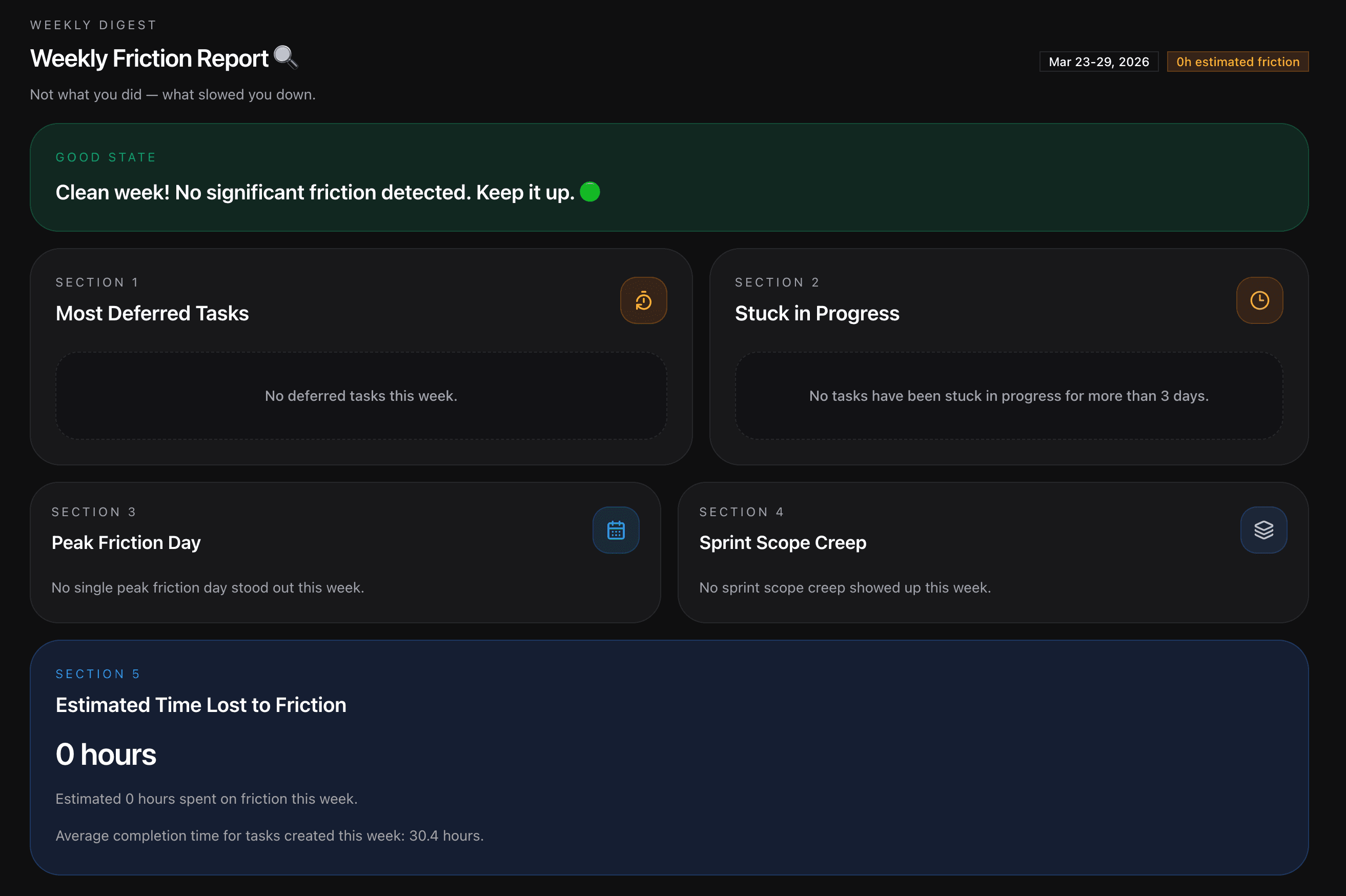
- Review the friction behind missed work instead of only the missed work itself.
- Turn vague carryover into clear next steps before the new week starts.
- Keep the ritual short enough that you can repeat it consistently.
The problem with most weekly reviews
A lot of weekly review advice assumes that looking at every unfinished task will naturally create clarity. For many people, especially ADHD brains, it does the opposite. The list gets louder, the guilt gets heavier, and the review starts to feel like a replay of everything that did not happen.
That is why a weekly review needs a different job. It should not be a courtroom. It should be a reset. The goal is to leave with fewer open loops, clearer next steps, and a more realistic picture of what next week can actually hold.
Start by asking where the drag came from
When something slipped, the most useful question is not 'Why didn't I do it?' The more helpful question is 'What made this harder to start, continue, or finish?'
Sometimes the answer is energy. Sometimes it is context switching, vague scope, or too many parallel priorities. Looking for friction points gives you something actionable to change. Looking only at the miss usually gives you another reason to avoid the next review.
- Look for tasks that were deferred multiple times.
- Notice work that stayed in progress without moving.
- Mark anything that felt unclear even when you wanted to do it.
Reduce the number of decisions future-you has to make
A strong weekly reset makes Monday lighter. That means turning vague carryover into something visible and specific before you close the review.
If a task is still active, give it a next step. If a note matters next week, connect it to the task it supports. If a project has too many simultaneous priorities, cut it down to the one move that will unlock the rest.
- Write the next visible step on active tasks.
- Archive or defer work that is no longer real.
- Link loose notes to the project or task they belong to.
Keep the ritual short enough to survive real life
An ambitious review checklist often dies after one busy month. The better approach is a review that still works when you are tired, late, or coming off a messy week.
A simple version can be enough: empty the capture pile, scan unfinished work, flag the biggest friction points, choose next week's priorities, and leave notes for where to restart. If the ritual takes 15 focused minutes and leaves you clearer, it is doing its job.
- Review the inbox or brain dump first.
- Scan carryover work before choosing new priorities.
- Finish by writing restart notes for the most important tasks.
Make the review kinder and more useful over time
A weekly review gets better when it teaches you something about your system. Maybe every week falls apart because your list is too long. Maybe certain tasks stay vague for too long. Maybe your best work happens when priorities are visible in one place instead of spread across several tools.
Those patterns are valuable. They show where the system should adapt to you. The goal is not to become perfect at planning. The goal is to build a review you can keep returning to because it reliably lowers the weight of the week ahead.
- Track repeated friction instead of treating each week like an isolated failure.
- Adjust the system where it keeps creating drag.
- Judge the review by how clear next week feels, not by how impressive the checklist looks.
Calmer Focus Awaits
Try Stride for free — the calm workspace built for ADHD brains.
Traditional tools make you manage lists. Stride works with how ADHD brains actually function: quick capture for fleeting thoughts before they distract you, narrowing the day to a Daily 3, and reviewing the friction behind missed work instead of piling on the guilt.