Quick takeaways
Build a system that still works when you come back tired.
- Long-term goals disappear from mind due to ADHD object permanence (out of sight, out of mind).
- Vague, distant milestones fail to trigger the dopamine needed for daily tasks.
- Connecting daily tasks directly to big goals keeps the 'why' visible and motivating.
- Break goals into flexible, bite-sized checkpoints to avoid feeling overwhelmed.
Out of sight, out of mind: The ADHD goal problem
Many people with ADHD set ambitious goals at the start of a year, only to completely forget they exist a month later. This isn't due to a lack of caring; it's a result of ADHD object permanence (sometimes called 'time blindness' or 'out-of-sight' thinking).
If a goal isn't actively visible in the workspace where daily decisions are made, it ceases to exist for the brain. The day-to-day grind becomes detached from the big picture, making routine tasks feel boring and meaningless.
Why distance drains motivation
The ADHD brain relies on immediate feedback loops to generate dopamine. A goal set six months in the future is too distant to create motivation today.
To maintain interest, long-term goals must be broken down and connected directly to the tasks you are doing right now. When you see exactly how checking off a small task moves the needle on a larger goal, the task gets an immediate boost in importance.
- Bring long-term goals into the daily view.
- Connect individual tasks to the larger objectives they serve.
- Use visual progress bars or indicators to show incremental growth.
Keep milestones small and flexible
Rigid goals that require perfect consistency are a recipe for discouragement. If you miss a week and feel like you've broken the system, the temptation is to abandon the goal entirely.
Instead, set flexible goals with small, digestible milestones. This creates frequent check-ins and opportunities to celebrate progress. If life gets messy, you can adjust the milestone without throwing away the entire goal.
- Create weekly or bi-weekly checkpoints instead of massive quarterly milestones.
- Refine goals during your weekly reviews to match real-world progress.
- Focus on directional progress rather than rigid deadlines.
The connected goal engine inside Stride
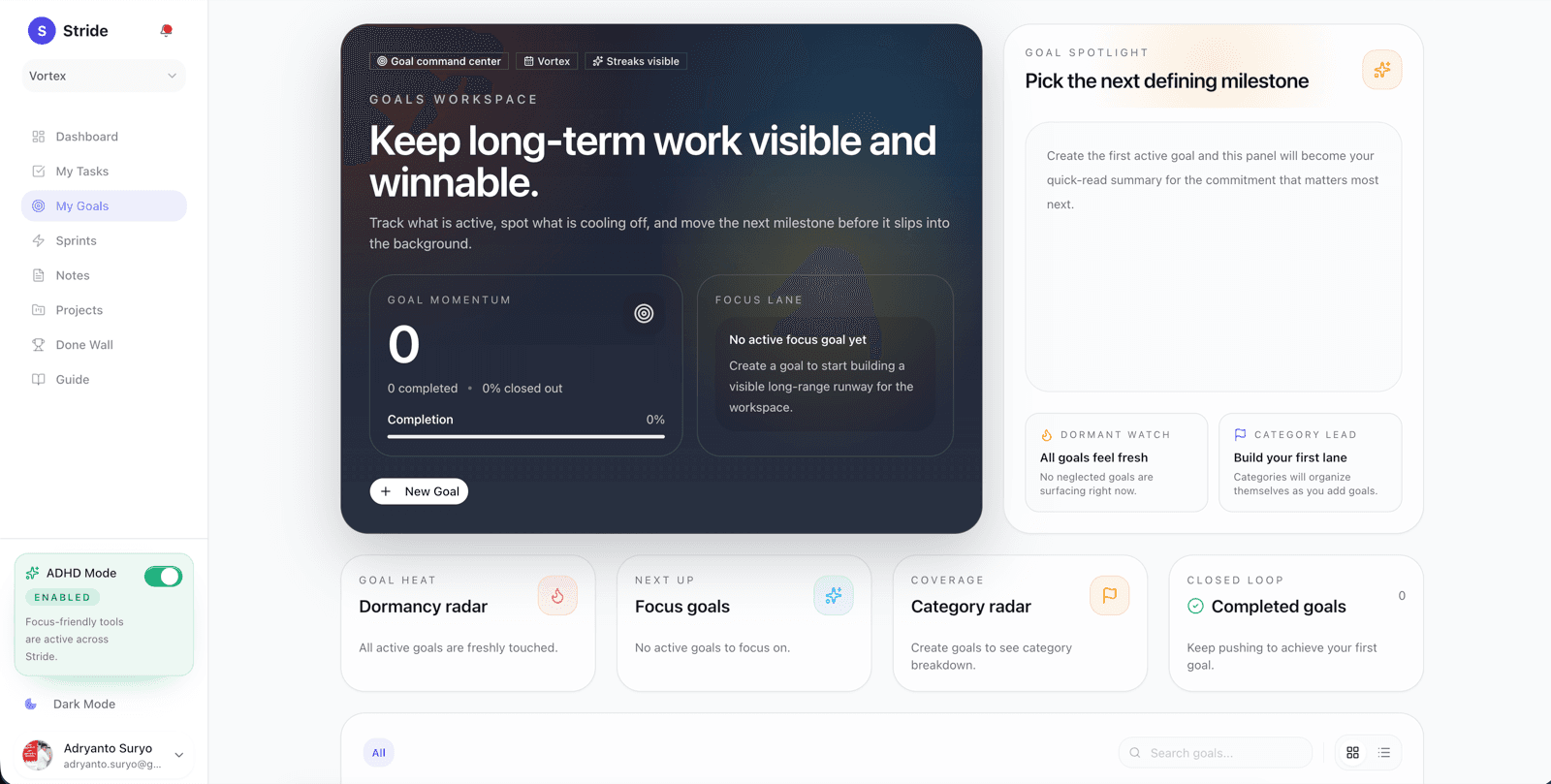
Stride solves the goal-permanence problem by integrating your goals directly into your daily workspace. You can link your notes and tasks directly to specific goals.
As you check off tasks in your Daily 3, your goals automatically update their progress indicators. The big picture is always just a click away, ensuring you never lose sight of why the work matters.
Calmer Focus Awaits
Try Stride for free — the calm workspace built for ADHD brains.
Traditional tools make you manage lists. Stride works with how ADHD brains actually function: quick capture for fleeting thoughts before they distract you, narrowing the day to a Daily 3, and reviewing the friction behind missed work instead of piling on the guilt.