Quick takeaways
Build a system that still works when you come back tired.
- ADHD energy and dopamine levels fluctuate unpredictably throughout the day.
- Scheduling tasks by strict time blocks often leads to guilt and failure.
- Categorizing tasks by energy levels (high vs. low friction) aligns work with capacity.
- Accepting low-energy periods prevents burnout and makes restarts easier.
The myth of linear energy: Why time blocking fails
Traditional productivity advice urges us to block out our calendar: 'Write report from 9 AM to 11 AM, code from 11:30 AM to 1 PM.' This assumes a steady, predictable supply of mental energy. For ADHD brains, energy is rarely linear.
Dopamine levels fluctuate, meaning you might wake up with high focus, crash in the afternoon, or find sudden clarity late at night. Trying to force a high-dopamine task (like creative design) during a low-dopamine state leads to frustration and task paralysis.
How to categorize tasks by brain state
A more compassionate and effective approach is energy-based productivity. Instead of scheduling tasks by when they should happen, organize them by how much energy they require.
This allows you to scan your tasks and match them to your current mental state. If you are feeling scattered, you can pick a low-energy task. If you are in a hyperfocus flow, you can tackle high-friction work.
- High-Energy (Deep Focus): Complex writing, strategy, problem-solving.
- Medium-Energy (Routine): Answering emails, simple planning, formatting.
- Low-Energy (Low-Friction): Organizing files, checking off admin work, archiving notes.
Lowering the entry barrier on heavy days
On low-energy days, the hardest part is the friction of getting started. A task that looks easy on Monday feels impossible on Thursday.
By having a pre-filtered list of low-friction tasks, you keep the system alive without burning yourself out. Checking off small, low-energy tasks maintains your momentum and helps slowly rebuild dopamine, sometimes unlocking the energy for heavier tasks later in the day.
- Keep a dedicated list or tag for low-friction tasks.
- Allow yourself to do easy work when focus is low.
- Measure success by consistency and system engagement, not just heavy output.
Designing a system that respects your energy
In Stride, you can organize and tag your tasks to quickly sort them by energy levels. The goal is to make the next step visible and accessible, no matter what your brain state is.
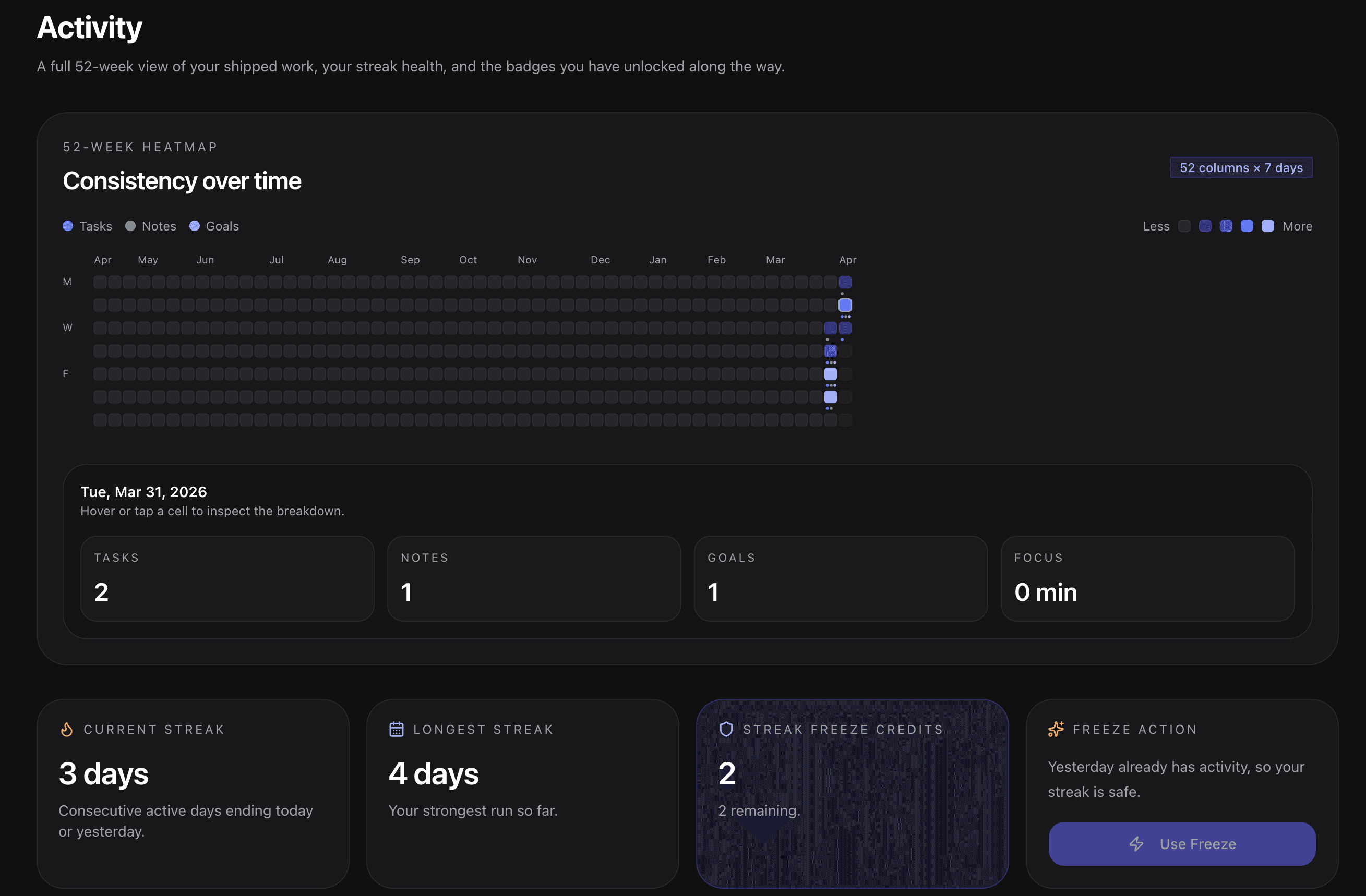
Rather than punishing yourself for having a low-focus day, Stride helps you adjust, keeping your streaks intact and your workload aligned with your natural capacity.
Calmer Focus Awaits
Try Stride for free — the calm workspace built for ADHD brains.
Traditional tools make you manage lists. Stride works with how ADHD brains actually function: quick capture for fleeting thoughts before they distract you, narrowing the day to a Daily 3, and reviewing the friction behind missed work instead of piling on the guilt.